Pew | Living Facts
Pew exists to inform the public through rigorous, fact-based research. But for most people, data can feel distant, abstract, and disconnected from everyday life. The challenge wasn’t the information. It was how it was experienced.
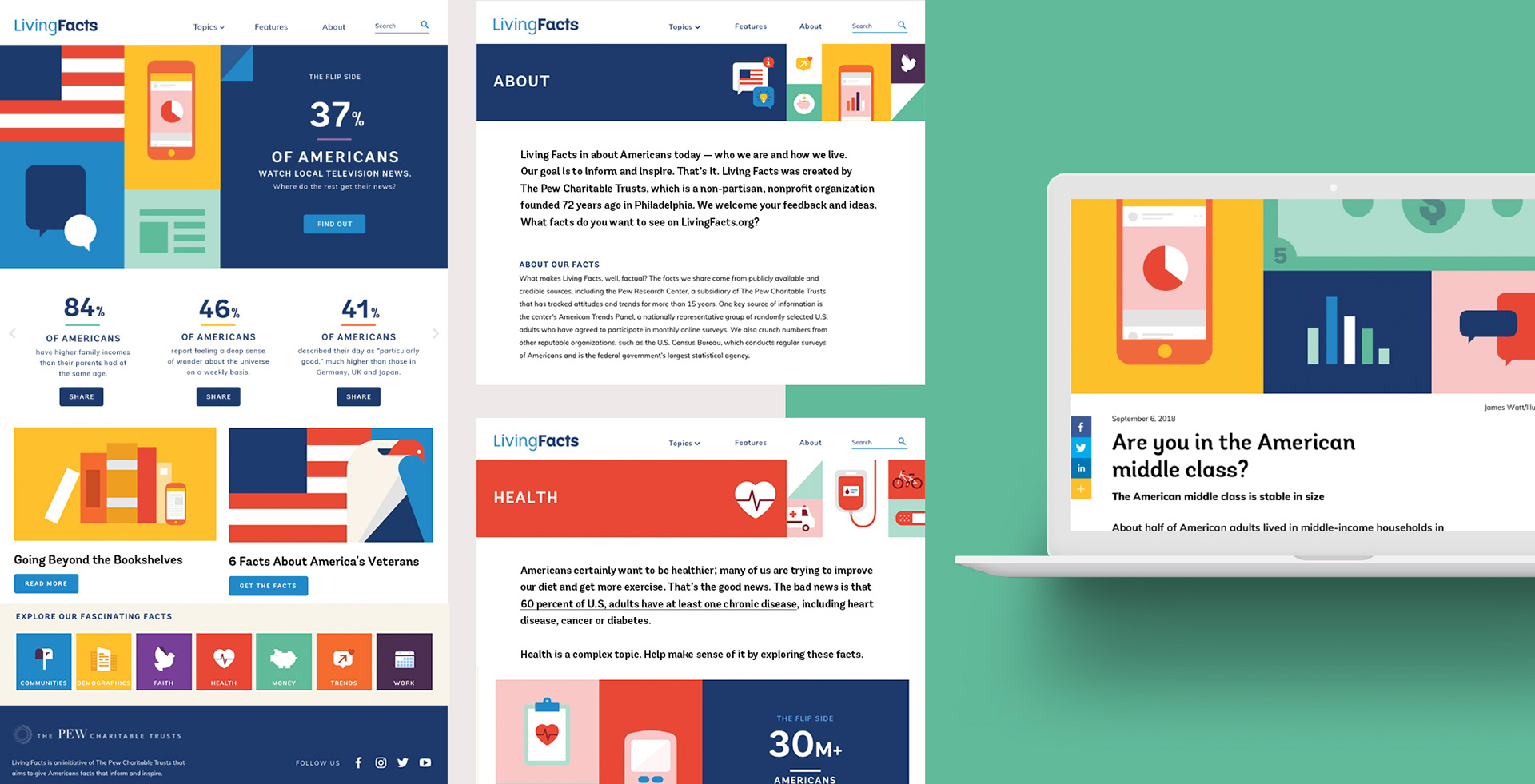
We built a content system designed to make data more human and accessible. Through a distinct visual language the work translated complex insights into relatable, everyday moments. Each piece was designed to bridge the gap between data and lived experience, turning facts into something people could see themselves in. The result was a more engaging, intuitive way for Pew to show up, reinforcing its role not just as a source of information, but as a lens into how people actually live.
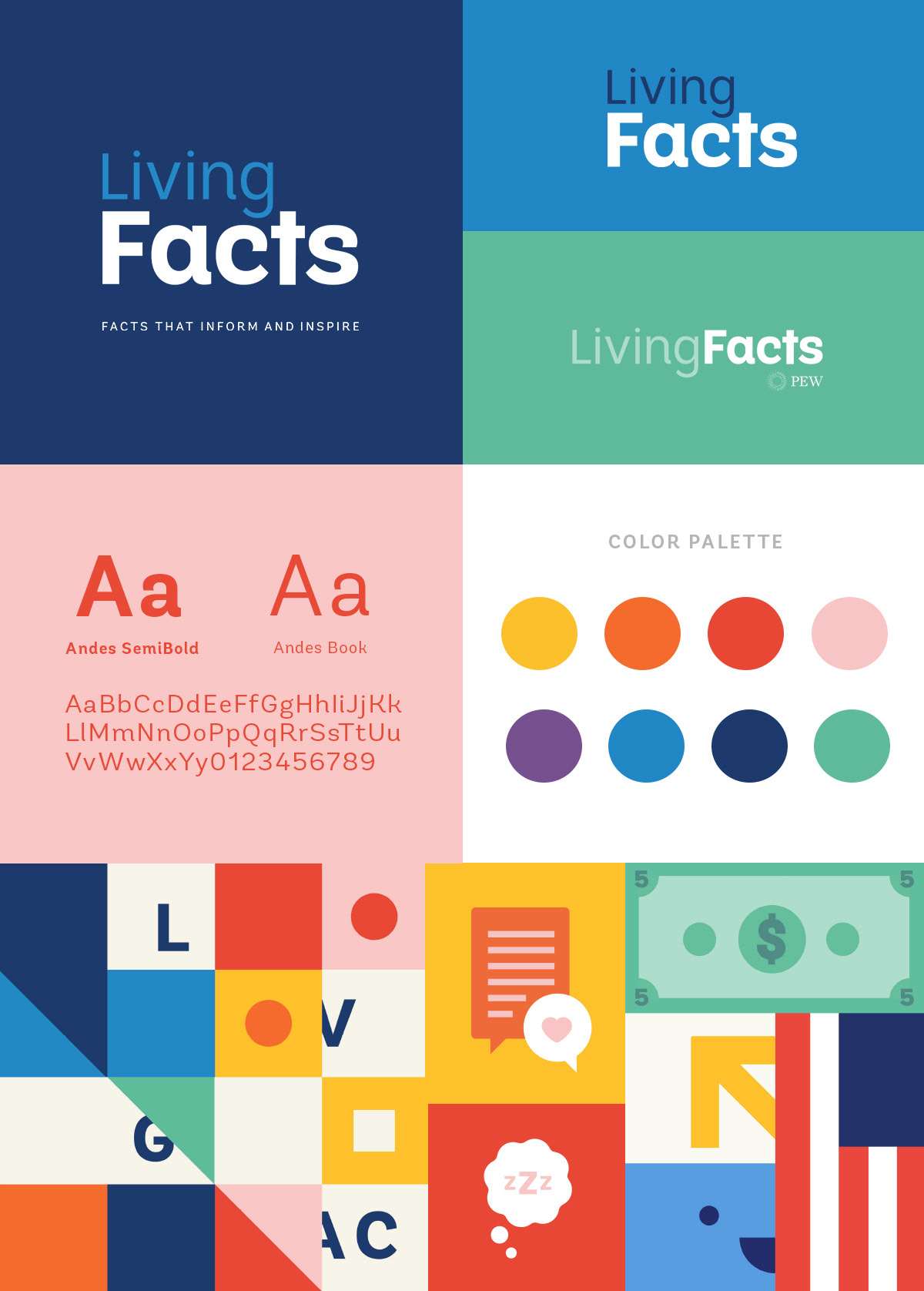
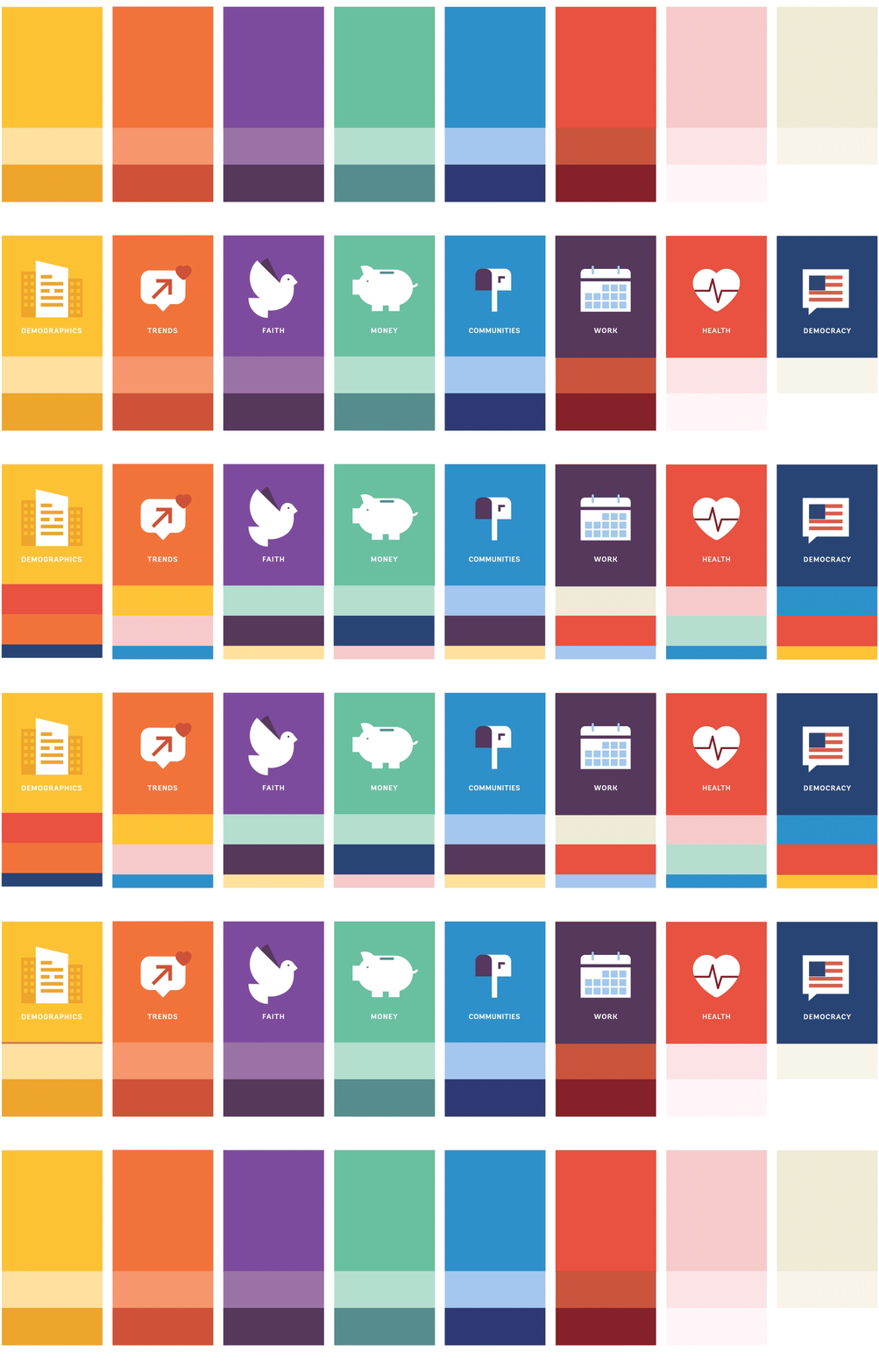
LivingFacts.org became the central hub for Pew’s insights, organized across eight topic areas: Demographics, Trends, Faith, Money, Communities, Work, Health, and Democracy. To make a wide range of information feel both distinct and cohesive, we built a flexible color system that gave each category its own personality while maintaining a unified experience.
Brand Launch on Social
We launched the brand across Facebook, Instagram, and Twitter, translating Pew’s research into content designed to spark “ah ha” moments. Each post brought data into a more human context, making insights easier to understand, share, and connect to everyday life.
April Facts Day
To extend the system beyond everyday content, we created moments that celebrated facts in culture. April Facts Day was designed as the antidote to April Fools, using social and programmatic to reinforce the value of truth in a way that felt timely and engaging.
To extend the system beyond everyday content, we created moments that celebrated facts in culture. April Facts Day was designed as the antidote to April Fools, using social and programmatic to reinforce the value of truth in a way that felt timely and engaging.
National Trivia Day
We brought fact-based storytelling into new environments by celebrating National Trivia Day across movie theaters, social, programmatic, and LivingFacts.org. Each touchpoint reinforced the same idea: making information more interactive, memorable, and easy to engage with.
We brought fact-based storytelling into new environments by celebrating National Trivia Day across movie theaters, social, programmatic, and LivingFacts.org. Each touchpoint reinforced the same idea: making information more interactive, memorable, and easy to engage with.
Internet Radio
We extended the system into audio by using listening behaviors to deliver hyper-targeted, contextual messaging on Spotify and Pandora. By aligning facts with moments in real time, the work made data feel more relevant and personally connected.
We extended the system into audio by using listening behaviors to deliver hyper-targeted, contextual messaging on Spotify and Pandora. By aligning facts with moments in real time, the work made data feel more relevant and personally connected.